Showing posts with label TPN. Show all posts

Friday, December 30, 2016

Life in the Undiagnosed World: Our Journey for a Diagnosis

“Take him home and try to give him as normal of a life as possible.”

What is normal? For one extremely, amazing four-year old little boy named Cohen, normal, means absolutely nothing can enter his body to nourish him. He survives solely on nutritional life support. It means being hospitalized for low grade fevers, extremely aggressive medications to combat infections, and being confined to an IV pole everyday. Normal, means his time outdoors is limited, no swimming, or rough little boy games. It means, leaving the house with a heavy backpack which contains a large volume of infusing fluids. This is Cohen’s reality and he deserves a better normal.

This brave little boy’s entire life has been full of invasive procedures and hospitalizations. All attempts to feed and medicate him through his digestive system have failed, ending with violent vomiting and internal bleeding. His body can only tolerate ice chips, which must be vented back out of his stomach through a gastric tube. Due to lack of motility, even small amounts of water can cause hours of painful episodes where he screams, begging for help. An extremely large colon and intestines are another source of his stomach aches, requiring continuous venting of air pressure from his belly to reduce discomfort.

Two years ago, Cohen’s growth and development reached a critical point and his doctor placed a central line (permanent IV) in his chest. It is through this line that Cohen receives TPN (total parental nutrition). His daily caloric intake is measured through blood draws which ensure all of his nutritional needs are being met. This medical nutrition is administered through 24 hour infusion, seven days a week. Without this life sustaining medication, Cohen could not survive.

Cohen’s body is in a constant state of inflammation and any illness can send his immune system into extreme overdrive, shutting down organs in its path. Cohen recently had emergency surgery to remove his severally inflamed gallbladder which was dangerously near perforating. In 2016, he went into acute liver failure from an infection that progressed quickly, wreaking havoc on his little body. Therefore, even low grade fevers must be met with aggressive medications to prevent extreme inflammatory responses and sepsis. Since he becomes ill so quickly he must be transported by air. Cohen's medical team is six hours from our home and it would be to dangerous to drive that distance during an acute situation.


Severe food/medicine allergies and intestinal failure are just a facet of Cohen’s illness. His list of symptoms and diagnosis cross over into every system in his body. Genetic sequencing revealed two additional diseases, Familial Mediterranean Fever (FMF) and Factor V Deficiency (bleeding disorder). However, Cohen's physicians do not believe these diseases are his main illness. He has also been diagnosed with dysautonomia, which is an umbrella term used to describe a lack of communication in the autonomic nervous system. For Cohen, this means he has fatigue and issues with temperature regulation, making it challenging for him to be outside. It means he screams in pain when touching snow or sweats profusely in warm temperatures. Other evasive health issues include; antibodies in his platelets,  pancytopenia (all blood systems low, making blood transfusions and iron infusions necessary), hands and feet turning blue, chronic pancreatitis, as well as malacia in his upper and lower airway and nodules on his throat and vocal cords. 

Normal for Cohen means heartfelt conversations with amazing doctors which begin with, “I know you’re going to ask me some really tough questions that I am not going to have the answers for, and I am going to feel awful about it.” It’s hearing the words, “Everything we try for him is experimental at this point.” Normal, is not having a plan for lack of a diagnosis.

Our team of care givers includes gastroenterology, hematology, pulmonology, immunology, ENT and rheumatology. Although, this is an amazing team of physicians, at one of the top children’s hospitals in the world, they don’t have a name for Cohen’s illness. His care is coordinated between all of these services and their resources, but they are limited by the boundaries of modern medicine. 

Without a diagnosis, we have no prognosis or plan of care. Our best hope is to keep him as well as possible. For now we simply pray that the extreme measures used to nourish him, do not eventually destroy the same organs they are currently keeping alive.

Physicians have no more medical intervention to offer him. No more treatments. No better plan. We find ourselves with an unclear picture of Cohen’s future. Currently, our entire care team agrees that Cohen’s illness has yet to be identified by science. 

What does all of this mean for Cohen? We wait, hoping and praying that the science of tomorrow will arrive today.

When Cohen’s disease finally gets a name we will have hope for a better treatment plan and the possibility of a cure. For now we simply pray that our story connects with individuals who hold the possibility for answers. Unfortunately, until that day arrives he will continue to be a member of the undiagnosed world and remain on a journey for a diagnosis.

“Take him home and try to give him as normal of a life as possible.” The ugly truth is although we are frustrated and hurt, we know these words come from well-intended and equally frustrated physicians, not because they want to deliver this kind of news, but because they have no more options at this point.


This is Cohen’s normal. My question is, “How can we make it better?”


your photo name

Monday, August 8, 2016

"What Do You Mean He Can't Eat?"


Did you know that our Super Cohen has a very real Super Power....
He can live without eating food!


“What do you mean, he can’t eat?” people ask. Two years ago I would have had a similar response. That was before I knew people can survive without consuming food.


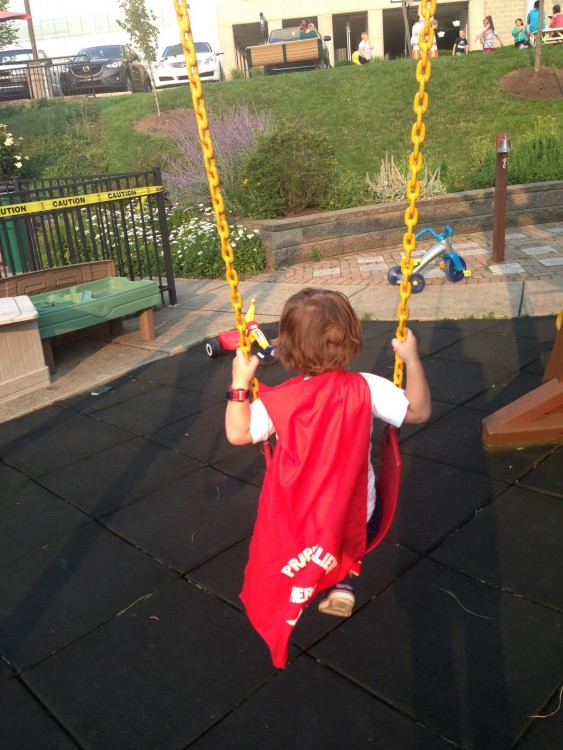
Cohen on a swing, wearing his superhero cape.

HPN Awareness Week is August 7–13, 2016. About 40,000 Americans,including my son, live on home parenteral Nutrition or TPN (total parenteral nutrition). Parenteral nutrition (PN) is the feeding of a person intravenously, bypassing the usual process of eating and digestion. The person receives nutritional formulae that contain nutrients such as glucose, salts, amino acids, lipids and added vitamins and dietary minerals. It is called total parenteral nutrition (TPN) or total nutrient admixture (TNA) when no significant nutrition is obtained by other routes.
Our journey with TPN began in March 2015, when attempts to feed Cohen through his GI system failed. Cohen’s doctor describes his condition as idiopathic intestinal failure, which simply means we have yet to figure out why his intestines don’t function like they should.
All of Cohen’s nutrition comes from this amazing source of life sustaining medication. In the past,patients on TPN would have had to remain hospitalized to receive this type of treatment, but now because of advancements in medical equipment, patients like Cohen can live at home.
TPN is made especially for each patient; it’s a “made to order” form of nutrition, extremely specific to each individual’s blood lab results. In order for Cohen to grow at an
appropriate rate, he must receive continuous nutrition through his veins (or as Cohen says, he eats through his heart) and his infusion lasts for 20 hours. Unfortunately, this only enables him to be disconnected from pumps and IV poles for a few hours each evening, but this is his time to be like other kids his age. Watching him run, jump and play with his friends and siblings is a gift I will never take for granted.
There is no doubt that TPN provides us with many blessings, allowing us to live outside of the hospital. However, TPN does not come without risks, and should not be considered unless all other options of nutrition have failed first.
One potentially devastating side effect is liver damage, which can occur from long term use. Because TPN is administered through an IV catheter, there is also a great risk of life-threatening infections. Last February Cohen developed a fungal infection which progressed to what his physicians described as an overactive immune response by his body. He went into acute liver failure and septic shock. It was a very scary time for us, but we are grateful that he is doing much better now.
Because of the danger of infection, we must be vigilant in the way we care for Cohen and his IV line. This requires us to do weekly sterile dressing changes at the catheter insertion site. He must also avoid contact sports and swimming, because the line must remain protected and dry to avoid bacteria growth.
TPN allows him to do things like mop the floors,
dressed as Buzz of course!
We live in a world where food is the center of much of our daily experiences, such as parties, movies, and other events. But for someone who can’t eat, it can be another reminder of how different they are from others. This week gives us a chance to share a glimpse of what life is like for those who can’t eat food. For a 3-year-old, it means no swimming, and limited time on the playground. It means no birthday cakes or treats like other kids his age.
TPN is not easy to deal with, but it allows Cohen to be part of life. Our family strives to enjoy the blessings and gifts each day has to offer.
My hope is that by answering questions about TPN, we can build a pathway to education and understanding, breeding compassion and inclusion.

This is a very special week for us. It is our chance to remind the world that we are all beautifully different.
Visit the Oley Foundation for more information about living on HPN or enteral feeds.


HPN Awareness Week! 


August 713, 2016 


Please check out our friends at the Oley Foundation for more information about living on HPN or Enteral Feeds.


your photo name

Sunday, May 17, 2015

Water on Our Wood

Lately, we've kind of had a string of not-so-great news. To be honest, I started feeling a little defeated as Todd and I spoke about the results of Cohen's biopsies from his lung bronchoscopy. And then somewhere in our conversation my wonderful husband reminded me of an amazing and frequently overlooked Bible story.

His words fell over me like a blanket of comfort, lifting my spirits and changing my perspective.

Todd said, "Remember the prophet Elijah? This is just more water on our wood, honey. Let them soak it so all the world will see just how remarkable our God is when he lights our fire; leaving no doubt as to who is responsible for our miracle."

Later in the day Cohen started running a fever. Because he has a central line he must be admitted and treated for a possible line infection. And now we must sit in the hospital for three days, waiting to see if his cultures grow bacteria... just more water on our wood. 

The prophet Elijah had a BIG job to do and he did it in a BIG way. He devotedly demonstrated the amazing faithfulness of our God, and so will we.


So go ahead and soak our wood 
if it will allow God's 
blazing fire to be undeniably recognized by all!!

1 Kings 18:20-39
20 So Ahab sent word throughout all Israel and assembled the prophets on Mount Carmel. 21 Elijah went before the people and said, “How long will you waver between two opinions? If the Lord is God, follow him; but if Baal is God, follow him.”
But the people said nothing.
22 Then Elijah said to them, “I am the only one of the Lord’s prophets left, but Baal has four hundred and fifty prophets. 23 Get two bulls for us. Let Baal’s prophets choose one for themselves, and let them cut it into pieces and put it on the wood but not set fire to it. I will prepare the other bull and put it on the wood but not set fire to it. 24 Then you call on the name of your god, and I will call on the name of the Lord. The god who answers by fire—he is God.” Then they called on the name of Baal from morning till noon. “Baal, answer us!” they shouted. But there was no response; no one answered. And they danced around the altar they had made.
27 At noon Elijah began to taunt them. “Shout louder!” he said. “Surely he is a god! Perhaps he is deep in thought, or busy, or traveling. Maybe he is sleeping and must be awakened.” 28 So they shouted louder and slashed themselves with swords and spears, as was their custom, until their blood flowed. 29 Midday passed, and they continued their frantic prophesying until the time for the evening sacrifice. But there was no response, no one answered, no one paid attention.
30 Then Elijah said to all the people, “Come here to me.” They came to him, and he repaired the altar of the Lord, which had been torn down. 31 Elijah took twelve stones, one for each of the tribes descended from Jacob, to whom the word of the Lord had come, saying, “Your name shall be Israel.” 32 With the stones he built an altar in the name of the Lord, and he dug a trench around it large enough to hold two seahs[a] of seed. 33 He arranged the wood, cut the bull into pieces and laid it on the wood. Then he said to them, “Fill four large jars with water and pour it on the offering and on the wood.”
34 “Do it again,” he said, and they did it again.
“Do it a third time,” he ordered, and they did it the third time. 35 The water ran down around the altar and even filled the trench.
36 At the time of sacrifice, the prophet Elijah stepped forward and prayed:

Lord, the God of Abraham, Isaac and Israel, let it be known today that you are God in Israel and that I am your servant and have done all these things at your command. 37 Answer me, Lord, answer me, so these people will know that you, Lord, are God, and that you are turning their hearts back again.”
38 Then the fire of the Lord fell and burned up the sacrifice, the wood, the stones and the soil, and also licked up the water in the trench.
39 When all the people saw this, they fell prostrate and cried, “The Lord—he is God! The Lord—he is God!”                                                    
your photo name